It was not epilepsy changing my life, but friends who once witnessed me unconscious. The next day, I found myself alone and different. That act of rejection forced me into the shell of self-rejection, where I felt myself as a huge, ugly mistake.
Years later, I realised how little I knew of emotions beyond the instinct to escape.
I remember my first self portrait. Sitting avoidantly in front of the camera, exposing myself to myself. That was slow, painful, and the bravest thing I’ve ever done. It was a process of accepting, learning not to judge, and perceiving different traits not as flaws within a system, but as something specifically beautiful that define what makes someone distinct. And I was meant to start from myself.
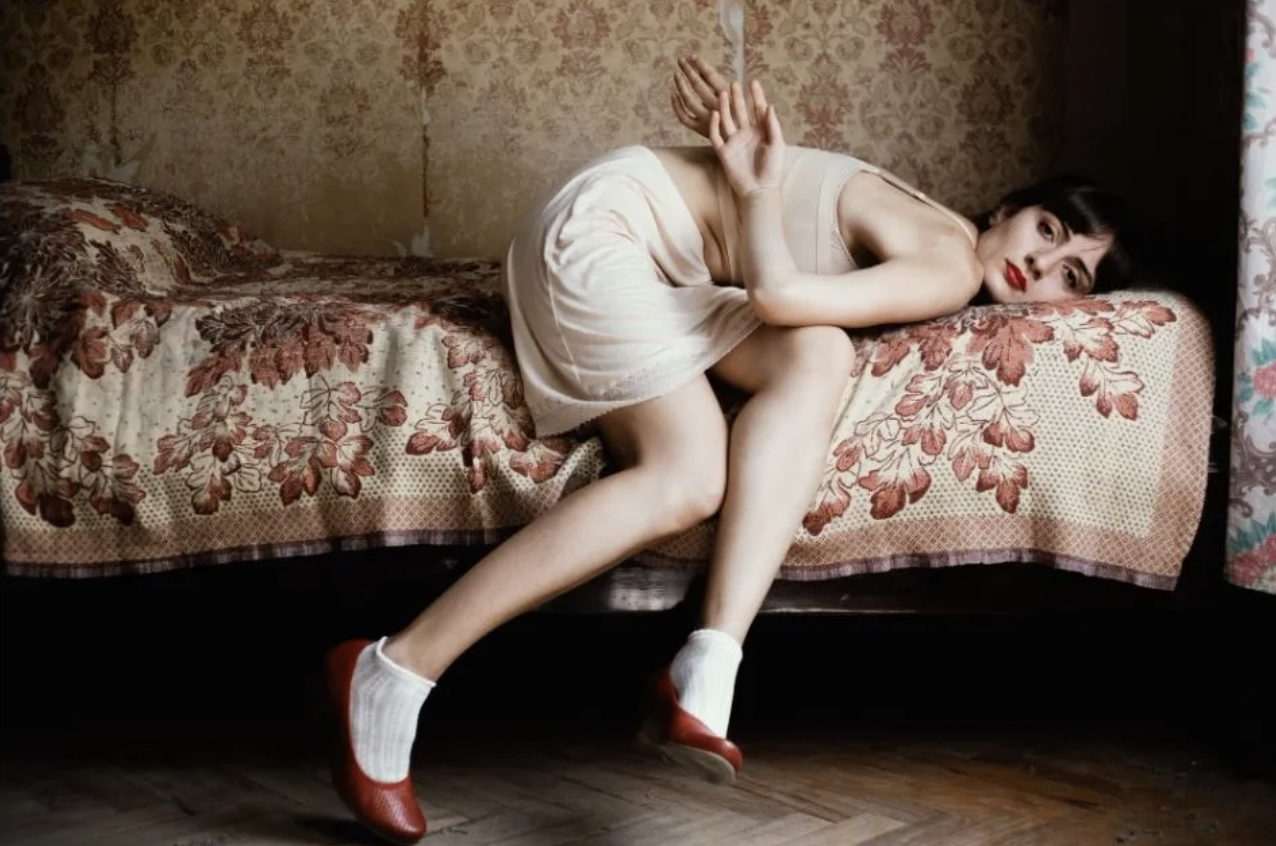
I photograph people when they stop performing themselves. They arrive protected, holding familiar photography poses. I am waiting actively, not just observing them and create conditions for dissolution. And people slowly surrender to the flow.
I infuse photos with reflections of mirrors. Not as a technique, but because in my reality, the boundary between a person and the outer world is never certain, the edges can dissolve, everything can blur and transform in a second without warning. I don't impose this. I simply recognize these moments, when something shifts in people and photograph it before it returns to normal.
Biography
Lilit L Hovhanni, conceptual portrait photographer
Lilit L Hovhanni is a Yerevan-based visual artist working in fine art and conceptual portrait photography. Her work explores identity, perception, femininity and instability.
When she was a child, she read a book by an Armenian writer titled “Lilit” and felt ashamed without understanding why.
Years later, her mother told the family backstory behind her name and she also learned a legend about Lilith, the first woman, a figure from paradise who became the embodiment of everything dangerous, ungovernable and female. The artist returned to the childhood book. And found at the beginning of the story a sentence: God, looking with admiration on Lilith whom he had created for Adam, said: "She is kind, because she is beautiful."
She is kind, because she is beautiful. That book was the beginning of questioning a lot of things, the particular pressure of being looked at and found legible, categorized, settled. Are kindness and beauty interconnected or maybe they oppose each other? Maybe this is a methaphoric story telling us that even god may be mistaken in conclusions, as Lilith never belonged to Adam.
The artist began to dive into such contradictions. She wondered whether the names in general, her name are bound to destiny or are just an identifier. And Lilit started creating repeating yet different frames of the same concept, with different names, stories and faces.
Her photography is concerned with what people carry within themselves that the world has taught them to hide, to conceal, and what happens in rare moments when they stop concealing it. Lilit's practice is shaped in part by the legacy of Armenian modernist Yervand Qochar, whose sculptures introduced three dimensionality into flat planes. She pursues the inverse and introduces depth into photography through optical construction, so that what appears flat contains many layers. And in her portraits, layers don’t stack, they coexist. Different selves appear simultaneously in the same dimension, on the same plane, in the same face without any hierarchy.